
CFD Risk Management with Exness in Hong Kong
Master CFD risk management strategies with Exness in Hong Kong. Learn position sizing, stop losses, and portfolio protection techniques for successful trading.
💡 You may also find these trading risk guides useful:
- CFD Stop Loss Guide
- CFD Hedging Strategy
- Advanced Forex Trading Strategy
- Exness Trading Strategy Guide
- Open a Free Exness Demo Account
Understanding CFD Risk Management Fundamentals
CFD Risk Management is essential for protecting trading capital while aiming for consistent returns. Our company offers tailored risk assessment tools for traders based in Hong Kong. These tools focus on managing exposure to volatile markets through position sizing, stop losses, and diversification. CFDs magnify market movements by applying leverage, which increases both potential gains and risks. Our system helps monitor these risks with automated calculations and real-time data.
Traders using our platform benefit from built-in risk calculators and indicators. Position sizing limits the amount risked per trade, while stop-loss orders cap potential losses. Diversification across various CFD assets further minimizes concentration risk. Our technology continuously evaluates portfolio risk and adjusts recommendations accordingly.
| Risk Management Tool | Purpose | Recommended Usage |
|---|---|---|
| Position Sizing Calculator | Calculates trade size based on risk percentage | Use before entering every trade |
| Stop Loss Orders | Limits maximum loss per trade | Set immediately after trade execution |
| Take Profit Levels | Secures profits at predetermined points | Place at 2:1 or 3:1 risk-reward ratio |
Platform Risk Management Features
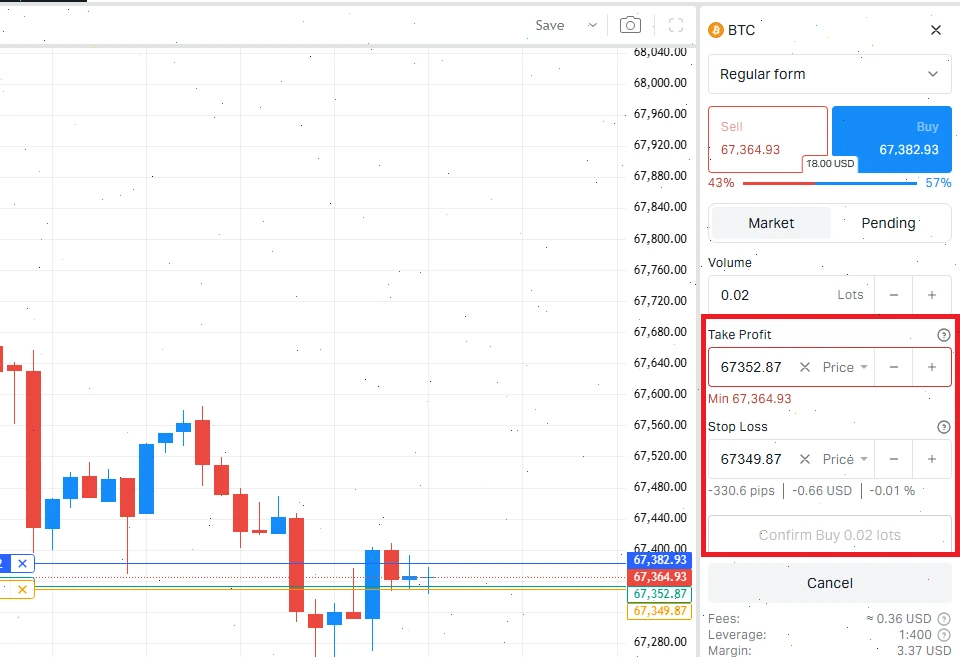
Our platform integrates advanced functionalities to manage trading risks effectively. The Position Risk Calculator updates in real time, showing possible losses based on current stop-loss levels and position sizes. Margin monitoring provides clear metrics such as used margin, free margin, and margin level percentages. These indicators help traders maintain safe leverage ratios compliant with Hong Kong regulations.
Risk alerts notify users via email, SMS, and platform pop-ups when risk thresholds are approached. This ensures timely action to adjust or close positions. Negative balance protection guarantees that traders cannot lose more than their deposited funds, mitigating risks of debt.
Automated forced liquidation activates when margin levels fall below minimum requirements, closing positions to prevent further losses. These systems run continuously during market hours to maintain account safety.
Setting Up Risk Parameters
Traders begin by defining their personal risk tolerance via questionnaires integrated into our platform. This initial assessment influences recommended leverage limits and position sizing. Default risk settings can be personalized in the preferences menu, including maximum position size, stop-loss percentages, and daily loss limits.
Users can create and save multiple risk templates to quickly apply consistent risk strategies across different trades. This feature streamlines trade setup while ensuring adherence to individual risk policies.
Position Sizing Configuration
To configure position size, input your account balance, chosen risk percentage, and stop-loss distance into the calculator. The platform then outputs optimal position size in units and monetary terms. For most Hong Kong traders, a 2% risk per trade is advisable.
Stop-Loss Distance Selection
Stop-loss distances depend on instrument volatility and trade duration. Short-term scalping requires tighter stops, while longer-term trades tolerate wider stops. Our system suggests distances based on historical volatility data for each CFD instrument.
Stop Loss and Take Profit Strategies
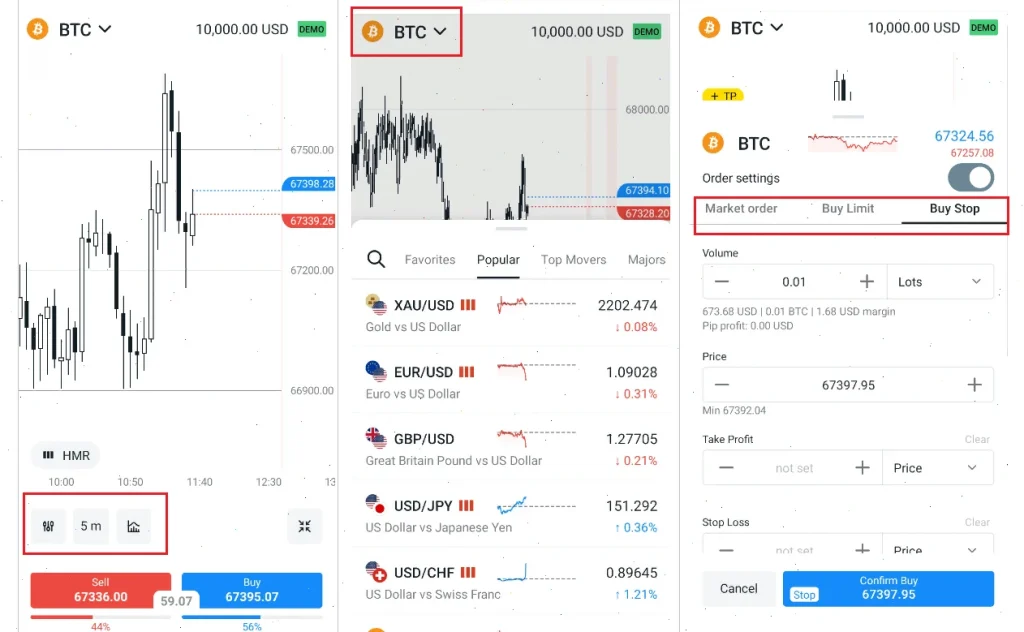
Stop-loss orders are compulsory risk controls for every CFD trade. We support fixed price stops, trailing stops, and guaranteed stops. Fixed stops execute at predetermined price levels, typically set near technical support or resistance zones.
Trailing stops follow favorable price movements automatically, adjusting stop levels according to a set point or percentage distance. This ensures profit protection while allowing room for market fluctuations. Guaranteed stops execute at exact prices, costing a premium but offering certainty during volatile conditions.
Partial Stop Losses and Time-Based Stops
Partial stops allow closing parts of a position at different price points. Our platform supports multiple exit orders for a single trade to secure profits incrementally. Time-based stops close positions after a set duration, reducing overnight exposure risk.
| Stop Loss Type | Execution Method | Best Use Case |
|---|---|---|
| Market Stop | Executes at next available price | Standard risk management |
| Limit Stop | Executes only at specified price | Volatile market conditions |
| Guaranteed Stop | Executes at exact specified price | High-impact news events |
Take Profit Optimization
Take profit levels should maintain risk-reward ratios of 1:2 or higher. Our platform calculates potential returns based on entry and target prices to assist in assessing trade viability. Multiple take profit orders allow staged profit-taking during different market phases, with up to five separate exit points supported.
Portfolio Diversification Methods
Diversification is fundamental in reducing overall portfolio risk. Exness provides access to more than 200 CFD instruments including forex pairs, commodities, indices, and stocks. This broad selection enables spreading risk across uncorrelated assets and market sectors.
Currency diversification involves trading various pairs including majors, minors, and exotics. Sector diversification distributes exposure among industries such as technology, healthcare, and finance. This mix helps protect against market-specific downturns.
Asset Class Allocation
Equity CFDs offer exposure to individual companies across global exchanges, including Hong Kong’s Hang Seng listings. Commodity CFDs track metals, energy, and agricultural products, often moving independently of equities and currencies. Index CFDs represent broad market segments, providing diversified exposure with single trades.
Geographic Distribution
Regional diversification reduces the impact of localized economic events. Our instruments cover Asia-Pacific, Europe, and Americas, including emerging and developed markets. This geographic mix supports balanced risk profiles and growth opportunities.
Leverage Management Techniques
Leverage amplifies trade outcomes, impacting both profits and losses. Our platform offers leverage ratios from 1:1 to 1:500 based on instrument and account type. Hong Kong retail traders typically use conservative leverage, capped around 1:10, to limit downside risk.
Dynamic leverage adjustment allows traders to modify leverage in response to changing market volatility. Lower leverage during turbulent periods and higher during stable markets help maintain account health.
Leverage Calculation and Margin Monitoring
Effective leverage is calculated by dividing total exposure by account equity. The platform continuously displays this ratio to alert traders of high-risk positions. Margin calls occur when equity drops below maintenance requirements, with forced liquidation starting at 20% margin levels.
| Leverage Ratio | Risk Level | Recommended For |
|---|---|---|
| 1:1 to 1:10 | Low | Beginning traders |
| 1:10 to 1:50 | Medium | Experienced traders |
| 1:50 to 1:500 | High | Professional traders |
Risk Assessment Tools and Indicators
Our platform integrates multiple indicators to evaluate trading risks. The Volatility Index measures expected price fluctuations over selected timeframes, assisting in position sizing and stop-loss placement. Correlation matrices reveal relationships between instruments, helping avoid overexposure to correlated assets.
Risk-adjusted metrics such as Sharpe and Sortino ratios assess returns relative to volatility, offering insights into strategy performance. Maximum drawdown statistics indicate potential capital erosion during losing periods.
Technical Indicators for Risk
Average True Range (ATR) quantifies volatility for setting stop-loss distances. Bollinger Bands highlight normal price ranges and breakout signals. Relative Strength Index (RSI) identifies overbought or oversold conditions, aiding entry and exit timing.
Fundamental Risk Factors
Economic calendars with impact ratings allow traders to anticipate volatility around news events. Interest rate differentials influence currency volatility and carry trades. Geopolitical news feeds keep traders informed of market-moving developments, all accessible within the platform.
Emergency Risk Management Procedures
During market crises, immediate risk responses are critical. Our platform features one-click position closure for rapid risk reduction. Circuit breakers halt trading during excessive volatility to prevent impulsive decisions. Disaster recovery systems maintain platform availability during technical failures.
Position reduction strategies allow partial exposure decrease to protect capital while maintaining some market participation. Hedging via correlated instruments provides downside protection without exiting markets entirely. Our alert systems notify traders promptly via multiple channels to enable informed decisions.
| Emergency Procedure | Function | Application |
|---|---|---|
| One-Click Close | Rapidly closes all open positions | Market crisis situations |
| Circuit Breakers | Suspends trading during extreme volatility | Price movement thresholds exceeded |
| Disaster Recovery | Keeps platform operational during failures | Technical disruptions |
Our integrated CFD Risk Management system supports Hong Kong traders with tools, automation, and education. This framework balances capital protection with profit opportunities through disciplined strategies and real-time monitoring.
❓ FAQ
What is the recommended risk percentage per trade with Exness in Hong Kong?
We advise risking no more than 2% of your account balance per trade to maintain sustainable capital growth.
How does Exness protect traders from losing more than their deposits?
Our platform includes negative balance protection, which automatically covers losses exceeding deposited funds.
Can I customize stop-loss and take profit settings on the Exness platform?
Yes, you can set fixed, trailing, guaranteed stops, and multiple take profit levels through our advanced order management interface.
What leverage options are available for Hong Kong traders?
Leverage ranges from 1:1 up to 1:500 depending on your account type and instrument, with retail accounts capped for safety.
How can I monitor and manage risk in real time on the platform?
The risk dashboard provides real-time exposure, margin levels, and alerts for effective portfolio management.